
Zen Brush

Updated: Jun 14

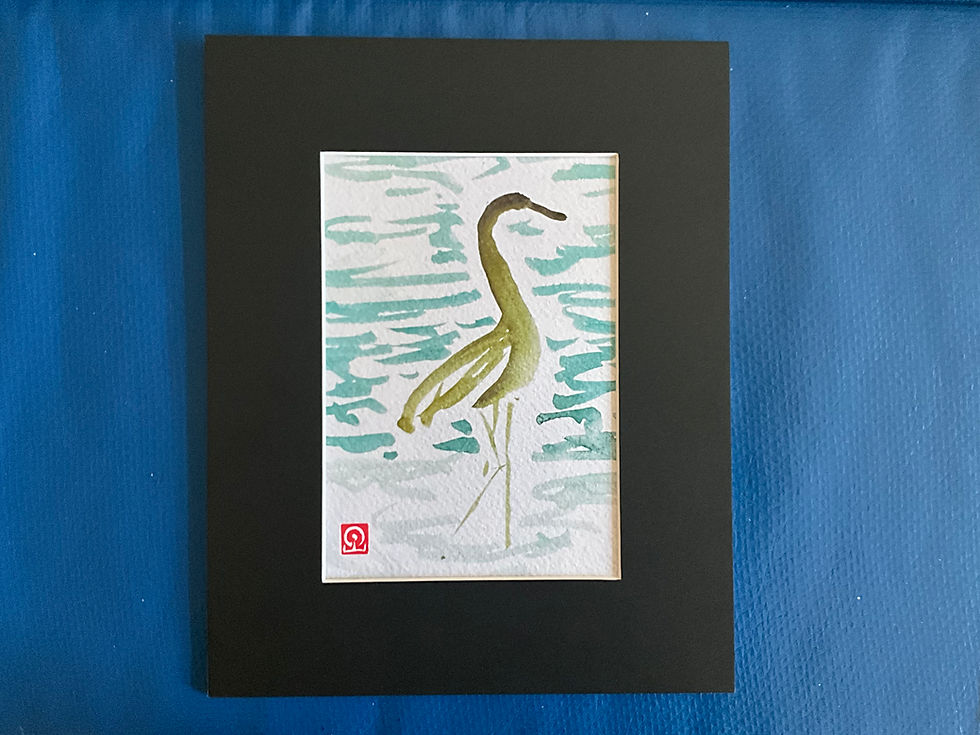
In teaching Eastern brushwork again I find I see the class in two parts: Classical Japanese Calligraphy (Shodo) in which I actually hold the rank of Godan, and Zen Brush which, as you might've guessed, is outside all ranking systems. My classes are a combination of these studies. If we look at a painting we can see that it has two parts: form and energy. In my classes, we initially focus on both parts to ultimately paint with both. In this way, we're able to approach brushing a full bodied painting that has representation, life, and depth.
FORM: The form that comes from Classical Japanese Brush involve the entire experience: the atmosphere of the place, the set up, which brushes to use, choice of ink, placement on the table but also the posture of the artist, the way they hold their brush. Even the lesson itself centers on the classical forms of Tensho, Reisho, Kaisho, Gyosho, Sosho as well as the stroke order, and the placement of the brush to make the proper stroke.
ENERGY: And when we get to the stroke itself, which is the most important aspect of brushwork of any kind, we begin to merge into the area I call Zen Brush. Considerations of breath, emptiness, and the use of the universal energy are foremost. These elements to brush work I learned from different teachers, the teachers of Classical Japanese Brush do not talk about the elements I've listed above and often when I looked around the classroom to my fellow students many of whom held higher rank than me, their postures were horrible. A shocker to me really. But I realize I bring to my brush practices a background in Aikido and especially Sword practice as Aikido is often seen as based on samurai sword work, but I also took classes separately in Iaido (the Way of the Sword) for many years. And so elements of posture and movement from the center and with the breath are primary to swordwork and thus to Aikido too. But I have now progressed to the brush ... sometimes a 6' brush with the hairs of a horsetail to manage. Same posture, same center, same breath as one learns how to control and dance with the soft hairs at the end of the bamboo pipe. It is not for wimps!
The pen (brush) is mighter than the Sword.
Comments